This is default featured slide 1 title

Go to Blogger edit html and find these sentences.Now replace these sentences with your own descriptions.

This is default featured slide 2 title

Go to Blogger edit html and find these sentences.Now replace these sentences with your own descriptions.

This is default featured slide 4 title

Go to Blogger edit html and find these sentences.Now replace these sentences with your own descriptions.

This is default featured slide 5 title

Go to Blogger edit html and find these sentences.Now replace these sentences with your own descriptions.

Showing posts with label In telecommunications. Show all posts

5 Jun 2013

Bluetooth


Bluetooth

Bluetooth is a wireless technology standard for exchanging data over short distances (using short-wavelength radio transmissions in the ISM band from 2400–2480 MHz) from fixed and mobile devices, creating personal area networks (PANs) with high levels of security. Created by telecom vendor Ericsson in 1994,it was originally conceived as a wireless alternative to RS-232 data cables. It can connect several devices, overcoming problems of synchronization.
Bluetooth is managed by the Bluetooth Special Interest Group, which has more than 18,000 member companies in the areas of telecommunication, computing, networking, and consumer electronics. Bluetooth was standardized as IEEE 802.15.1, but the standard is no longer maintained. The SIG oversees the development of the specification, manages the qualification program, and protects the trademarks. To be marketed as a Bluetooth device, it must be qualified to standards defined by the SIG. A network of patents is required to implement the technology and are licensed only for those qualifying devices.

Name and logo

The word "Bluetooth" is an anglicized version of the Scandinavian Blåtand/Blåtann, the epithet of the tenth-century king Harald I of Denmark and parts of Norway who united dissonant Danish tribes into a single kingdom. The idea of this name was proposed by Jim Kardach who developed a system that would allow mobile phones to communicate with computers (at the time he was reading Frans Gunnar Bengtsson's historical novel The Long Ships about Vikings and king Harald Bluetooth). The implication is that Bluetooth does the same with communications protocols, uniting them into one universal standard.
The Bluetooth logo is a bind rune merging the Younger Futhark runes Runic letter ior.svg (Hagall) (áš¼) and Runic letter berkanan.svg (Bjarkan) (á›’), Harald's initials.

Implementation

Bluetooth operates in the range of 2400–2483.5 MHz (including guard bands). This is in the globally unlicensed Industrial, Scientific and Medical (ISM) 2.4 GHz short-range radio frequency band. Bluetooth uses a radio technology called frequency-hopping spread spectrum. The transmitted data is divided into packets and each packet is transmitted on one of the 79 designated Bluetooth channels. Each channel has a bandwidth of 1 MHz. The first channel starts at 2402 MHz and continues up to 2480 MHz in 1 MHz steps. It usually performs 1600 hops per second, with Adaptive Frequency-Hopping (AFH) enabled.
Originally Gaussian frequency-shift keying (GFSK) modulation was the only modulation scheme available; subsequently, since the introduction of Bluetooth 2.0+EDR, Ï€/4-DQPSK and 8DPSK modulation may also be used between compatible devices. Devices functioning with GFSK are said to be operating in basic rate (BR) mode where an instantaneous data rate of 1 Mbit/s is possible. The term Enhanced Data Rate (EDR) is used to describe Ï€/4-DPSK and 8DPSK schemes, each giving 2 and 3 Mbit/s respectively. The combination of these (BR and EDR) modes in Bluetooth radio technology is classified as a "BR/EDR radio".
Bluetooth is a packet-based protocol with a master-slave structure. One master may communicate with up to 7 slaves in a piconet; all devices share the master's clock. Packet exchange is based on the basic clock, defined by the master, which ticks at 312.5 Âµs intervals. Two clock ticks make up a slot of 625 Âµs; two slots make up a slot pair of 1250 Âµs. In the simple case of single-slot packets the master transmits in even slots and receives in odd slots; the slave, conversely, receives in even slots and transmits in odd slots. Packets may be 1, 3 or 5 slots long but in all cases the master transmit will begin in even slots and the slave transmit in odd slots.
Bluetooth provides a secure way to connect and exchange information between devices such as faxes, mobile phones, telephones, laptops, personal computers, printers, Global Positioning System (GPS) receivers, digital cameras, and video game consoles. It was principally designed as a low-bandwidth technology.

Communication and connection

A master Bluetooth device can communicate with a maximum of seven devices in a piconet (an ad-hoc computer network using Bluetooth technology), though not all devices reach this maximum. The devices can switch roles, by agreement, and the slave can become the master (for example, a headset initiating a connection to a phone will necessarily begin as master, as initiator of the connection; but may subsequently prefer to be slave).
The Bluetooth Core Specification provides for the connection of two or more piconets to form a scatternet, in which certain devices simultaneously play the master role in one piconet and the slave role in another.
At any given time, data can be transferred between the master and one other device (except for the little-used broadcast mode[citation needed]). The master chooses which slave device to address; typically, it switches rapidly from one device to another in a round-robin fashion. Since it is the master that chooses which slave to address, whereas a slave is (in theory) supposed to listen in each receive slot, being a master is a lighter burden than being a slave. Being a master of seven slaves is possible; being a slave of more than one master is difficult. The specification is vague as to required behavior in scatternets.
Many USB Bluetooth adapters or "dongles" are available, some of which also include an IrDA adapter. Older (pre-2003) Bluetooth dongles, however, have limited capabilities, offering only the Bluetooth Enumerator and a less-powerful Bluetooth Radio incarnation. Such devices can link computers with Bluetooth with a distance of 100 meters, but they do not offer as many services as modern adapters do.

Uses

Bluetooth is a standard wire-replacement communications protocol primarily designed for low power consumption, with a short range (power-class-dependent, but effective ranges vary in practice; see table below) based on low-cost transceiver microchips in each device. Because the devices use a radio (broadcast) communications system, they do not have to be in visual line of sight of each other, however a quasi optical wireless path must be viable.

4 Jun 2013

Headphones


Headphones

History

Brandes radio headphones, circa 1920.
Headphones originated from the earpiece, and were the only way to listen to electrical audio signals before amplifiers were developed. The first truly successful set was developed by Nathaniel Baldwin, who made them by hand in his kitchen and sold them to the United States Navy.
Some very sensitive headphones such as those manufactured by Brandes around 1919 were commonly used for early radio work. These early headphones used moving iron drivers, either single ended or balanced armature. The requirement for high sensitivity meant no damping was used, thus the sound quality was crude. They also had very poor comfort compared to modern types, usually having no padding and too often having excessive clamping force to the head. Their impedance varied; headphones used in telegraph and telephone work had an impedance of 75 ohms. Those used with early wireless radio had to be more sensitive and were made with more turns of finer wire; impedance of 1,000 to 2,000 ohms was common, which suited both crystal sets and triode receivers.
In early powered radios, the headphone was part of the vacuum tube's plate circuit and had dangerous voltages on it. It was normally connected directly to the positive high voltage battery terminal, and the other battery terminal was securely grounded. The use of bare electrical connections meant that users could be shocked if they touched the bare headphone connections while adjusting an uncomfortable headset.

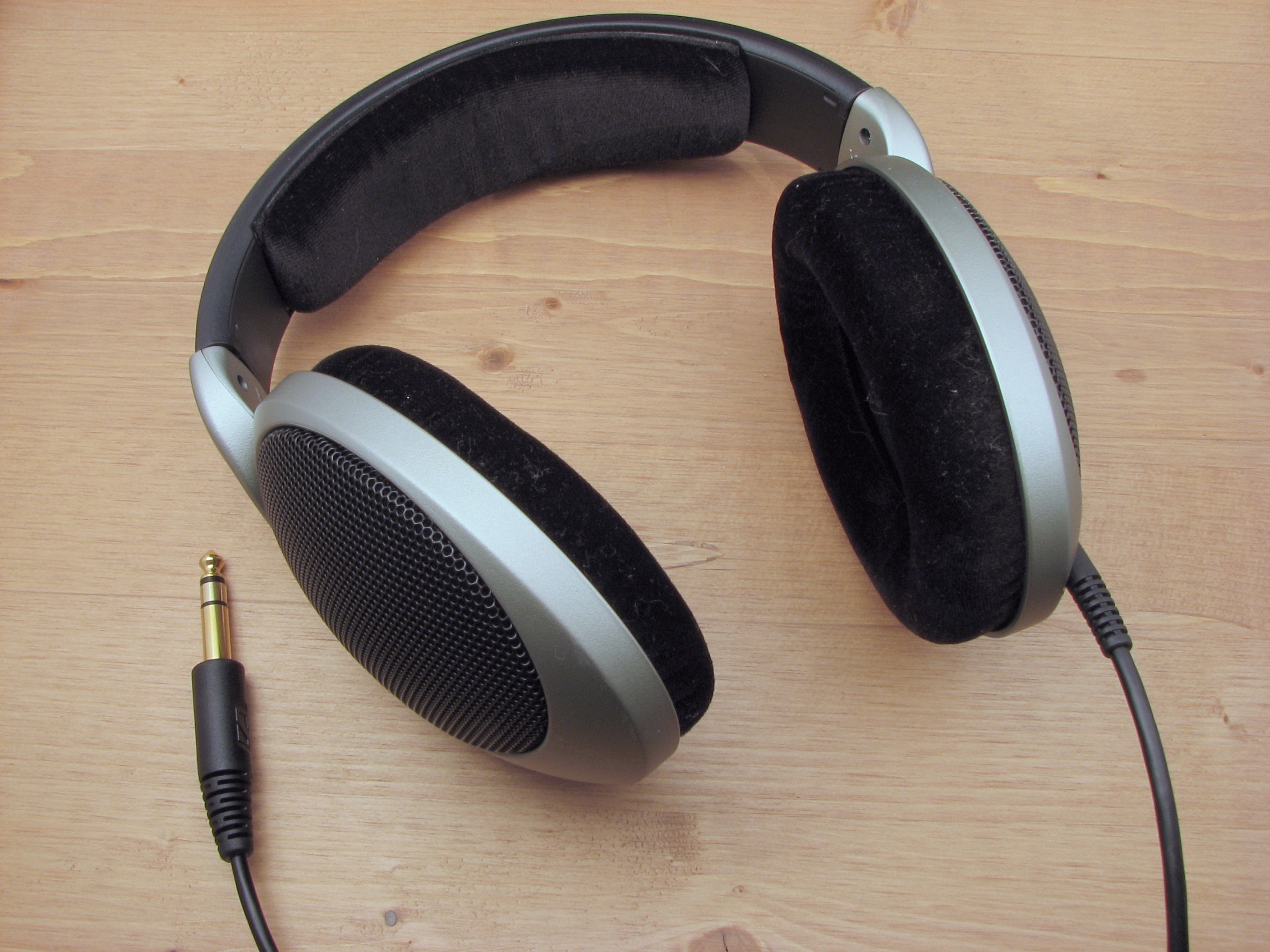
 File:Headphones-Sennheiser-HD555.jpg

Electrical characteristics

Electrical characteristics of dynamic loudspeakers may be readily applied to headphones since most headphones are small dynamic loudspeakers.

Impedance

Headphones are available with low or high impedance (typically measured at 1 kHz). Low-impedance headphones are in the range 16 to 32 ohms and high-impedance headphones are about 100-600 ohms. As the impedance of a pair of headphones increases, more voltage but less current is required to drive it, and the loudness of the headphones for a given voltage decreases. In recent years, impedance of newer headphones has generally decreased to accommodate lower voltages available on battery powered CMOS-based portable electronics. This results in headphones that can be more efficiently driven by battery powered electronics. Consequently, newer amplifiers are based on designs with relatively low output impedance.
The impedance of headphones is of concern because of the output limitations of amplifiers. A modern pair of headphones is driven by an amplifier, with lower impedance headphones presenting a larger load. Amplifiers are not ideal; they also have some output impedance that limits the amount of power they can provide. In order to ensure an even frequency response, adequate damping factor, and undistorted sound, an amplifier should have an output impedance less than 1/8 that of the headphones it is driving (and ideally as low as possible). If output impedance is large compared to the impedance of the headphones, significantly higher distortion will be present. Therefore, lower impedance headphones will tend to be louder and more efficient, but will also demand a more capable amplifier. Higher impedance headphones will be more tolerant of amplifier limitations, but will produce less volume for a given output level.
Historically, many headphones had relatively high impedance, often over 500 ohms in order to operate well with high impedance tube amplifiers. In contrast, modern transistor amplifiers can have very low output impedance, enabling lower impedance headphones. Unfortunately, this means that older audio amplifiers or stereos often produce poor quality output on some modern, low impedance headphones. In this case, an external headphone amplifier may be beneficial.

Sensitivity

Sensitivity is a measure of how effectively an earpiece converts an incoming electrical signal into an audible sound. It thus indicates how loud the headphones will be for a given electrical drive level. It can be measured in decibels of sound pressure level per milliwatt, or dB SPL/mW, which may be abbreviated to dB/mW. The sensitivity of headphones is usually between about 80 and 125 dB/mW.
Headphone sensitivity may be measured in dB/mW or dB/mV. These are dB SPL (sound pressure level) measured in a standard ear for a 1 kHz sinusoidal headphone input of either 1 milliwatt or one millivolt. One can convert between these two units if the impedance of the earpiece is known.

Types

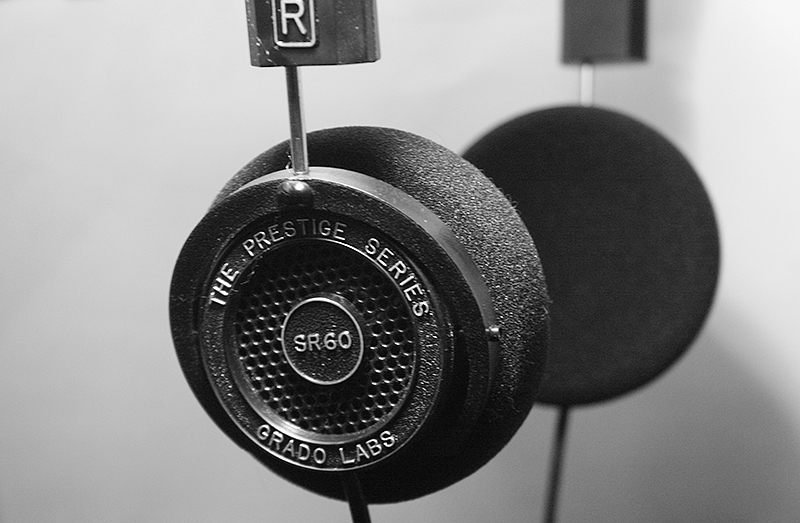
The particular needs of the listener determine the choice of headphone. The need for portability indicates smaller, lighter headphones, but can mean a compromise in fidelity. Headphones used as part of a home hi-fi do not have the same design constraints and can be larger and heavier. Generally, headphone form factors can be divided into four separate categories: circumaural, supra-aural, earbud, and in-ear.

File:GradoPrestige-HeadphoneArticle.jpg   File:Headphones 1.jpg

 
File:Headphone-transducer.jpgFile:In-ears-earphones.png
 File:Sony MDR-V6 headphones.jpg

2 Jun 2013

4G

 4G


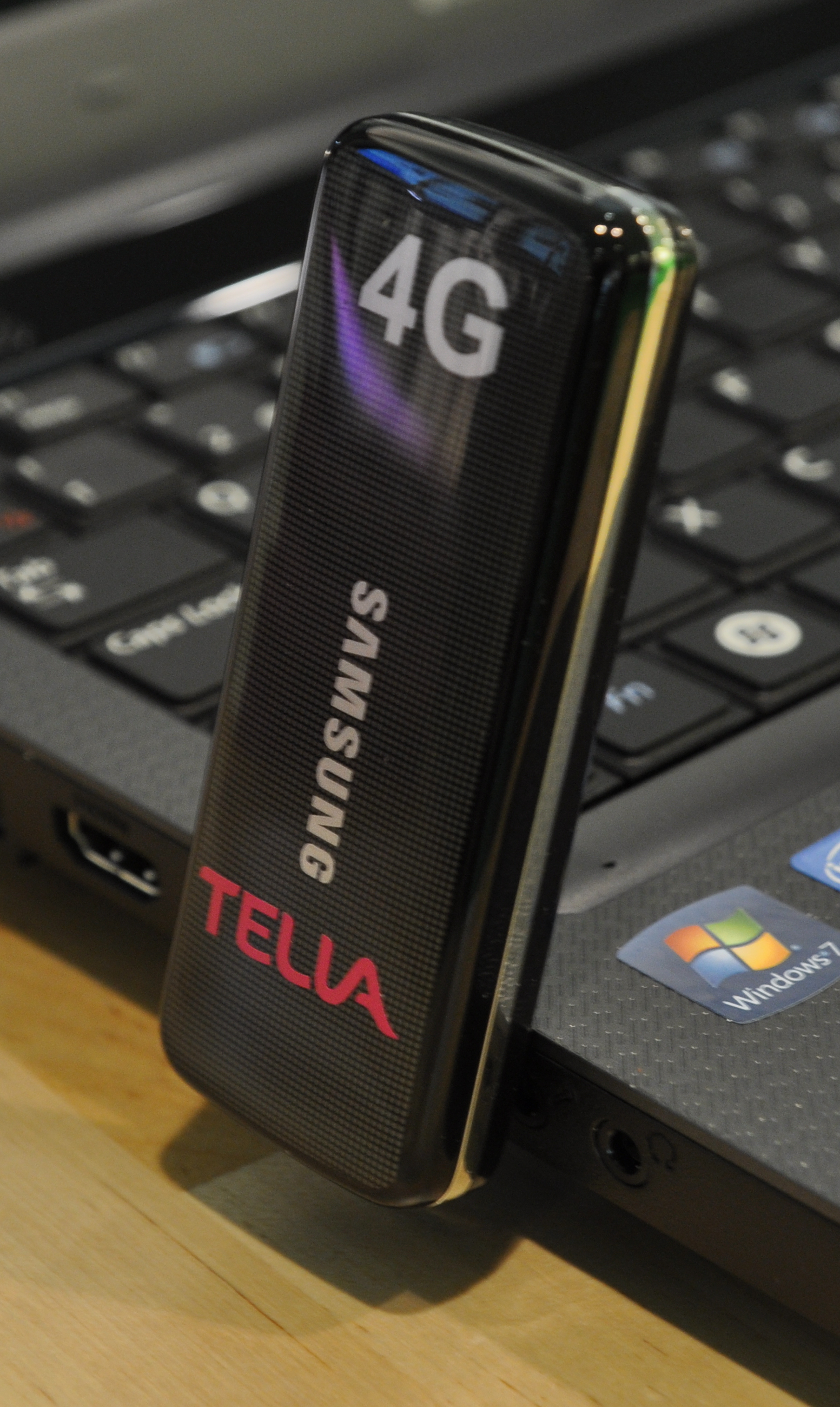
File:Samsung 4G LTE modem-4.jpgIn telecommunications, 4G is the fourth generation of mobile phone mobile communication technology standards. It is a successor of the third generation (3G) standards. A 4G system provides mobile ultra-broadband Internet access, for example to laptops with USB wireless modems, to smartphones, and to other mobile devices. Conceivable applications include amended mobile web access, IP telephony, gaming services, high-definition mobile TV, video conferencing, 3D television and Cloud Computing.
Two 4G candidate systems are commercially deployed: the Mobile WiMAX standard (at first in South Korea in 2006), and the first-release Long Term Evolution (LTE) standard (in Oslo, Norway and Stockholm, Sweden since 2009). It has however been debated if these first-release versions should be considered to be 4G or not, as discussed in the technical definition section below.
In the U.S., Sprint Nextel has deployed Mobile WiMAX networks since 2008, and MetroPCS was the first operator to offer LTE service in 2010. USB wireless modems have been available since the start, while WiMAX smartphones have been available since 2010, and LTE smartphones since 2011. Equipment made for different continents are not always compatible, because of different frequency bands. Mobile WiMAX are currently (April 2012) not available for the European market.


Technical definition

In March 2008, the International Telecommunications Union-Radio communications sector (ITU-R) specified a set of requirements for 4G standards, named the International Mobile Telecommunications Advanced (IMT-Advanced) specification, setting peak speed requirements for 4G service at 100 megabits per second (Mbit/s) for high mobility communication (such as from trains and cars) and 1 gigabit per second (Gbit/s) for low mobility communication (such as pedestrians and stationary users).[1]
Since the first-release versions of Mobile WiMAX and LTE support much less than 1 Gbit/s peak bit rate, they are not fully IMT-Advanced compliant, but are often branded 4G by service providers. On December 6, 2010, ITU-R recognized that these two technologies, as well as other beyond-3G technologies that do not fulfill the IMT-Advanced requirements, could nevertheless be considered "4G", provided they represent forerunners to IMT-Advanced compliant versions and "a substantial level of improvement in performance and capabilities with respect to the initial third generation systems now deployed".[2]
Mobile WiMAX Release 2 (also known as WirelessMAN-Advanced or IEEE 802.16m') and LTE Advanced (LTE-A) are IMT-Advanced compliant backwards compatible versions of the above two systems, standardized during the spring 2011,[citation needed] and promising speeds in the order of 1 Gbit/s. Services are expected in 2013.[3]
As opposed to earlier generations, a 4G system does not support traditional circuit-switched telephony service, but all-Internet Protocol (IP) based communication such as IP telephony. As seen below, the spread spectrum radio technology used in 3G systems, is abandoned in all 4G candidate systems and replaced by OFDMA multi-carrier transmission and other frequency-domain equalization (FDE) schemes, making it possible to transfer very high bit rates despite extensive multi-path radio propagation (echoes). The peak bit rate is further improved by smart antenna arrays for multiple-input multiple-output (MIMO) communications.
The term "generation" used to name successive evolutions of radio networks in general is arbitrary. There are several interpretations of it, and no official definition has been made despite the large consensus behind ITU-R's labels. From ITU-R's point of view, 4G is equivalent to IMT-Advanced which has specific performance requirements as explained below. But according operators, a generation of network refers to the deployment of a new non-backward-compatible technology. This usually corresponds to a huge investment with its own depreciation period, marketing strategy (if any), and deployment phases. It can even be different among operators. From the end user's point of view, only performance and cost makes sense. It is expected that the next generation of network performs better and cheaper than the previous generation, which is not that simple to state. Indeed, while a new generation of network arrives, the previous one can keep evolving to a point where it outperforms the first version of the new generation. In many countries, GSM, UMTS and LTE networks still coexist. It is thus much less ambiguous to use the name of the technology/standard, possibly followed by its version number, than a subjective arbitrary generation number which is destined to be challenged endlessly.

Background

The nomenclature of the generations generally refers to a change in the fundamental nature of the service, non-backwards-compatible transmission technology, higher peak bit rates, new frequency bands, wider channel frequency bandwidth in Hertz, and higher capacity for many simultaneous data transfers (higher system spectral efficiency in bit/second/Hertz/site).
New mobile generations have appeared about every ten years since the first move from 1981 analog (1G) to digital (2G) transmission in 1992. This was followed, in 2001, by 3G multi-media support, spread spectrum transmission and at least 200 kbit/s peak bit rate, in 2011/2012 expected to be followed by "real" 4G, which refers to all-Internet Protocol (IP) packet-switched networks giving Ultra Mobile Broadband (gigabit speed) access.
While the ITU has adopted recommendations for technologies that would be used for future global communications, they do not actually perform the standardization or development work themselves, instead relying on the work of other standards bodies such as IEEE, The WiMAX Forum and 3GPP.
In mid-1990s, the ITU-R standardization organization released the IMT-2000 requirements as a framework for what standards should be considered 3G systems, requiring 200 kbit/s peak bit rate. In 2008, ITU-R specified the IMT-Advanced (International Mobile Telecommunications Advanced) requirements for 4G systems.
The fastest 3G-based standard in the UMTS family is the HSPA+ standard, which is commercially available since 2009 and offers 28 Mbit/s downstream (22 Mbit/s upstream) without MIMO, i.e. only with one antenna, and in 2011 accelerated up to 42 Mbit/s peak bit rate downstream using either DC-HSPA+ (simultaneous use of two 5 MHz UMTS carrier)[4] or 2x2 MIMO. In theory speeds up to 672 Mbit/s is possible, but has not been deployed yet. The fastest 3G-based standard in the CDMA2000 family is the EV-DO Rev. B, which is available since 2010 and offers 15.67 Mbit/s downstream.[citation needed]

IMT-Advanced requirements

This article uses 4G to refer to IMT-Advanced (International Mobile Telecommunications Advanced), as defined by ITU-R. An IMT-Advanced cellular system must fulfill the following requirements:[5]
  • Be based on an all-IP packet switched network.
  • Have peak data rates of up to approximately 100 Mbit/s for high mobility such as mobile access and up to approximately 1 Gbit/s for low mobility such as nomadic/local wireless access.
  • Be able to dynamically share and use the network resources to support more simultaneous users per cell.
  • Using scalable channel bandwidths of 5–20 MHz, optionally up to 40 MHz.[6][7]
  • Have peak link spectral efficiency of 15 bit/s/Hz in the downlink, and 6.75 bit/s/Hz in the uplink (meaning that 1 Gbit/s in the downlink should be possible over less than 67 MHz bandwidth).
  • System spectral efficiency of up to 3 bit/s/Hz/cell in the downlink and 2.25 bit/s/Hz/cell for indoor usage.[6]
  • Smooth handovers across heterogeneous networks.
  • The ability to offer high quality of service for next generation multimedia support.
In September 2009, the technology proposals were submitted to the International Telecommunication Union (ITU) as 4G candidates.[8] Basically all proposals are based on two technologies:
Implementations of Mobile WiMAX and first-release LTE are largely considered a stopgap solution that will offer a considerable boost until WiMAX 2 (based on the 802.16m spec) and LTE Advanced are deployed. The latter's standard versions were ratified in spring 2011, but are still far from being implemented.
The first set of 3GPP requirements on LTE Advanced was approved in June 2008. LTE Advanced was to be standardized in 2010 as part of Release 10 of the 3GPP specification. LTE Advanced will be based on the existing LTE specification Release 10 and will not be defined as a new specification series. A summary of the technologies that have been studied as the basis for LTE Advanced is included in a technical report.
Some sources consider first-release LTE and Mobile WiMAX implementations as pre-4G or near-4G, as they do not fully comply with the planned requirements of 1 Gbit/s for stationary reception and 100 Mbit/s for mobile.
Confusion has been caused by some mobile carriers who have launched products advertised as 4G but which according to some sources are pre-4G versions, commonly referred to as '3.9G', which do not follow the ITU-R defined principles for 4G standards, but today can be called 4G according to ITU-R. A common argument for branding 3.9G systems as new-generation is that they use different frequency bands from 3G technologies; that they are based on a new radio-interface paradigm; and that the standards are not backwards compatible with 3G, whilst some of the standards are forwards compatible with IMT-2000 compliant versions of the same standards.


Deeksha. Powered by Blogger.